
Last Updated: October 26, 2026
Quick Summary
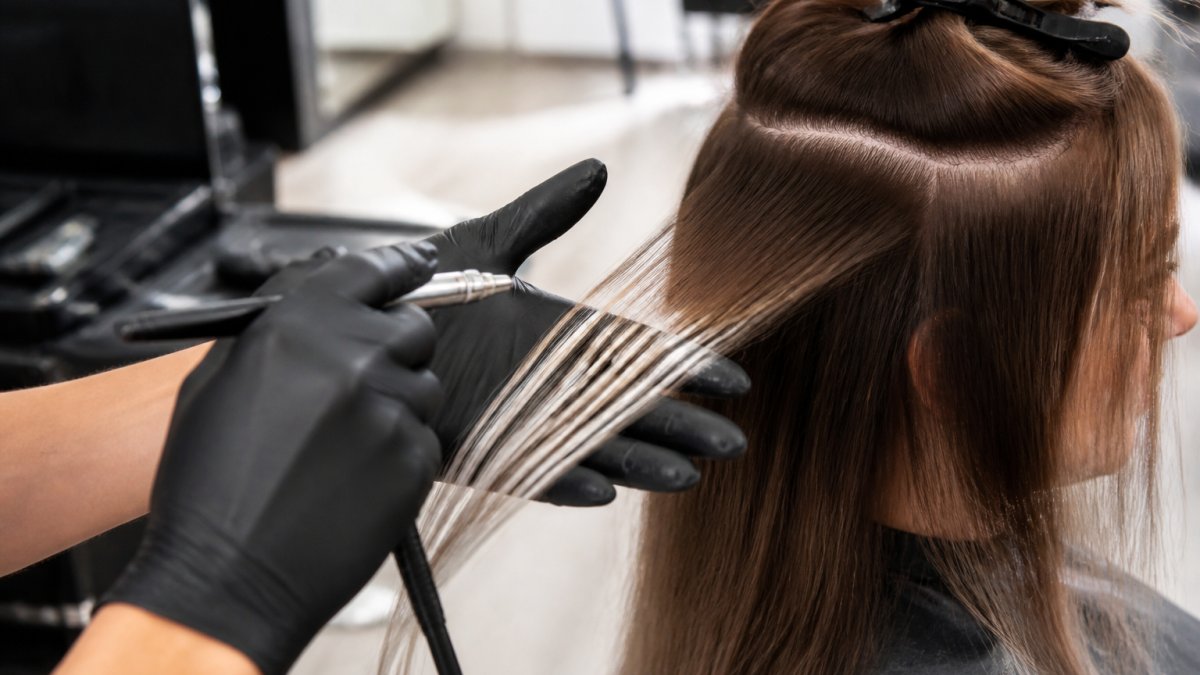
AirTouch hair coloring is a highlighting technique that uses a blow dryer’s airflow to separate short strands from long ones before color or lightener goes on. The stylist colors only the fine inner layers the dryer lifts, creating softer, more dimensional color with less harsh regrowth than traditional foil work.
- Air separation replaces teasing and backcombing, so strands avoid tangling and cuticle stress.
- The service follows seven stages, from consultation and sectioning through toning and finish.
- Most clients enjoy AirTouch highlights for six to ten weeks before regrowth shows.
- A full AirTouch service commonly takes three to five hours in the salon.
- AirTouch may be less effective on hair more than about 50 percent gray at the root.
Table of Contents
- What AirTouch Hair Coloring Is and How the Airflow Method Works
- Step by Step: How AirTouch Highlights Are Applied in the Salon
- AirTouch vs. Balayage: Which Highlighting Technique Fits Your Hair
- How Long Do AirTouch Highlights Last, and How Often Do You Need a Touch-Up?
- AirTouch Hair Cost and What Drives the Price
- AirTouch for Gray Blending and Hair That Has Been Colored Before
- Frequently Asked Questions
What AirTouch Hair Coloring Is and How the Airflow Method Works
AirTouch hair coloring is a highlighting technique that uses a blow dryer’s airflow to separate short strands from long ones before color or lightener goes on. The dryer lifts the fine inner layers, and the stylist colors only what rises. The result is softer, more dimensional color with less harsh regrowth than traditional foil work.
Why Air Separation Replaces Teasing and Backcombing
Older highlighting methods relied on backcombing, or teasing, to push hair up before painting it. That process tangles strands and stresses the cuticle. AirTouch swaps the comb for controlled airflow. A blow dryer set on a focused nozzle pushes shorter strands up and away from longer ones, so the stylist can see exactly where color should land. No knots, no breakage from rat-tail combs, and a cleaner root blend.
Step by Step: How AirTouch Highlights Are Applied in the Salon
The process follows a clear sequence, and each stage affects how the final blend looks.
- Consultation. Your stylist reviews hair history, condition, and the tone you want.
- Sectioning. Hair is divided into clean, manageable subsections.
- Air separation. A blow dryer lifts shorter strands from longer ones in each subsection.
- Strand selection. The stylist chooses which lifted strands get color.
- Color placement. Lightener or color is painted onto the selected strands.
- Processing. Color develops under a watchful eye to protect hair condition.
- Toning and finish. A toner refines the shade, then hair is styled.
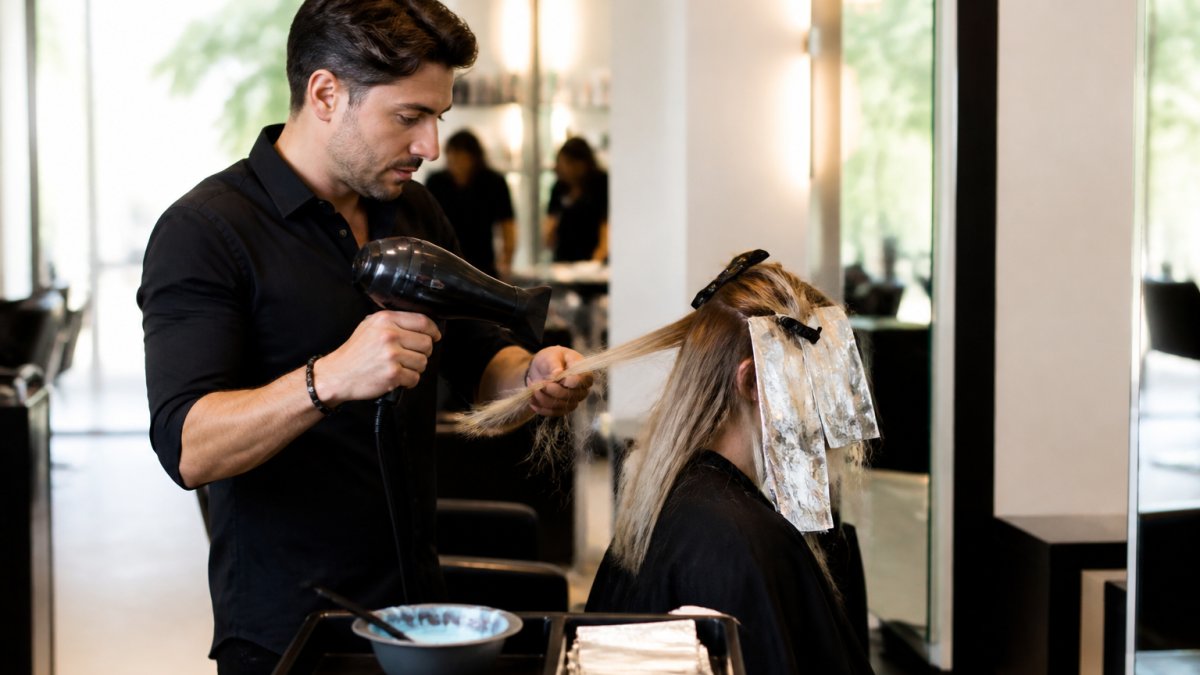
Sectioning, Strand Selection, and Color Placement
Precision lives in the details. Clean sectioning keeps the pattern even. Careful strand selection controls brightness and lift. Skilled color placement creates the soft transition that makes AirTouch highlights look natural. This is where stylist technique matters most. You can meet our colorists and book with one before your appointment.
AirTouch vs. Balayage: Which Highlighting Technique Fits Your Hair
AirTouch and balayage both aim for a seamless blend, but they get there differently. Balayage is freehand painting on the surface of the hair. AirTouch uses airflow to reach internal layers and finer strands. If you want brightness woven through the interior of your hair, AirTouch can be a good option. If you want a sun-kissed sweep along the outer layers, traditional balayage may suit you better.
| Technique | How Color Is Applied | Best For | Regrowth Look |
|---|---|---|---|
| AirTouch | Airflow separates strands, then color is painted | Soft internal dimension, fine hair | Blends gradually |
| Balayage | Freehand surface painting | Sun-kissed outer sweep | Soft but visible |
| Foils | Wrapped sections, full saturation | Strong lift, bold contrast | Sharper line |
| Teasylights | Teased sections inside foils | Maximum brightness | Harsher grow-out |
How Long Do AirTouch Highlights Last, and How Often Do You Need a Touch-Up?
Most clients enjoy their AirTouch highlights for six to ten weeks before regrowth becomes noticeable, and many stretch a full refresh to twelve weeks. Because the root blend is soft, grow-out looks gradual rather than harsh. A toner refresh midway keeps the shade fresh. Plan on a touch-up every two to three months, depending on how fast your hair grows and how light you go. To schedule yours, contact the salon for booking details.
AirTouch Hair Cost and What Drives the Price
AirTouch pricing is not a single number because the service is built around your hair, not a fixed menu item.
Several factors move the price up or down:
- Hair length and density. Longer or thicker hair requires more sections, more lightener, and more processing time. Shoulder-length fine hair sits at the low end; mid-back dense hair sits at the high end.
- Amount of lift. Going two shades lighter takes less product and processing than going five shades lighter. High-lift services often require an extra toning step.
- Color history. Previously colored, box-dyed, or banded hair may need a color correction or a preliminary treatment, which adds time and cost.
- Toner and finish. Most AirTouch services include a toner, but a custom toner or a gloss add-on can incur additional cost.
- Stylist experience. A colorist trained specifically in AirTouch may charge a premium.
Appointment time is the other planning number clients ask about. A full AirTouch service commonly takes three to five hours, and corrective or very long hair can run five to six hours. Partial applications may finish in two to three hours.
Ask for a consultation before you book. A short consultation lets the stylist assess your hair history, confirm a price range, and estimate appointment time so there are no surprises on service day.
To get a quote specific to your hair, contact the salon for booking details and request a consultation.
AirTouch for Gray Blending and Hair That Has Been Colored Before
AirTouch can work well for gray blending because the soft root blend can help integrate scattered grays. The lightener lifts selectively, and a toner can unify the shade so grays read as dimension rather than patches.
Previously colored hair requires more assessment. The stylist will check for banding, old highlights, overlapping color, and overall condition before deciding whether AirTouch is appropriate.
Suitability by hair history and condition:
- Damaged or over-processed hair. AirTouch can be a gentler approach than teasing, but lightener is still lightener. Hair that is already compromised may need a conditioning treatment such as an Organic Ceutical treatment before the service, and the stylist may reduce processing time or lift less aggressively.
- Curly hair. Airflow separation works on curls, but the stylist must account for shrinkage and curl pattern so the color lands where it will show after styling. Curly clients often need a dry-cut consultation first.
- Fine hair. Fine hair can respond well to AirTouch because the airflow lifts the finer inner strands easily, and the soft blend can help avoid a heavy, stripy look.
- Very short hair. AirTouch needs enough length for short strands to separate from long ones. On very short crops, a different highlighting method may be more practical.
- Previously box-dyed hair. Box dye can be unpredictable under lightener. A strand test and possibly a color correction are standard before AirTouch on box-dyed hair.
Troubleshooting and realistic expectations:
- Uneven lift. Can happen when strand selection is inconsistent or when hair has mixed porosity. A strand test and careful sectioning reduce the risk.
- Banding. Usually a sign of overlapping color or uneven application. Corrective toning or a targeted re-lightening step may be needed.
- Warmth or brassiness. Common when lifting dark starting colors. A toner controls it, but very dark hair may need more than one session to reach a cool, light result.
- Results vary with starting color and hair history. Two clients with the same inspiration photo can get different results because their starting pigment and condition differ. A consultation and strand test set honest expectations before the service begins.
If you are unsure whether your hair is ready, explore our color services and ask about a consultation and strand test.
Frequently Asked Questions
How long does AirTouch hair coloring take in the salon?
A full AirTouch service usually runs longer than a standard foil appointment because the stylist separates and selects each strand by hand. Expect a consultation, the color application, processing time, toning, and a blow-dry finish. Exact timing depends on your hair length, density, and how much lift you want. At a salon that treats color as a bespoke service, the appointment is blocked out to protect the result rather than rushed, so ask about the expected duration when you book.
Is AirTouch better than balayage?
Neither is universally better. AirTouch uses controlled airflow to separate shorter strands from longer ones, which can help produce a soft, seamless blend and a gentle root transition. Balayage is painted freehand and gives the stylist more freedom to place brightness where the light hits. AirTouch vs. balayage often comes down to your goal: AirTouch suits clients who want dimensional color with a low-maintenance grow-out, while balayage can be more direct for a sun-kissed effect. A consultation should settle which fits your hair history.
Can AirTouch be done on previously colored or damaged hair?
Yes, but the approach changes. Previously colored hair needs a strand test and a clear review of your color history before any lightener goes on, because old color can process unevenly. If your hair is fragile, a stylist may lower the lift, work in smaller sections, or pair the service with restorative treatments to protect condition. AirTouch for gray blending also works on colored hair, since the airflow method lets the stylist soften the line between gray and your base color instead of creating a flat block of coverage.
How much does AirTouch hair cost?
AirTouch hair cost varies by salon, stylist experience, hair length and density, and how much lightening or toning the service requires. Because every head of hair is different, a reputable salon quotes after a consultation rather than publishing a single figure. Ask what the estimate includes, whether toning and a finishing treatment are part of it, and how often you should expect to return. Request a current quote directly from the salon before you commit to the appointment.
AirTouch rewards patience and precision, and the difference shows in how your color grows out. If you want dimensional, natural-looking highlights from a team trained in the technique, Danny Jelaca Salon offers signature color mastery, Organic Ceutical treatments, and a red-carpet experience built around your hair. Get started with Danny Jelaca Salon and book a consultation for color that looks effortless from day one.

