
Last Updated: October 25, 2026
Quick Summary
To fix damaged hair from bleach without cutting it all off, first test whether you have dryness or structural damage, then hydrate with a weekly deep conditioning mask, leave-in conditioner and light oil. Add bond repair every other wash and a monthly protein treatment only if strands still feel mushy.
- Wet one strand and stretch it: hair that snaps fast has structural damage, not just dryness.
- Use a deep conditioning mask once a week for 20 minutes.
- Apply a bond repair treatment every other wash.
- Do a protein treatment monthly only if strands still feel mushy.
- Stop home treatment and see a stylist when wet hair snaps or feels gummy.
Table of Contents
- Step 1: Tell Dryness Apart From Structural Damage
- Step 2: How to Hydrate Hair After Bleaching
- Step 3: Build a Bleach-Damaged Hair Treatment Routine
- Step 4: Can You Repair Bleached Hair Without Cutting It?
- Frequently Asked Questions
Step 1: Tell Dryness Apart From Structural Damage
Bleach damage comes in two forms: one fixable, one not, and knowing which you have changes how to fix damaged hair from bleach. Knowing which you have changes how to fix damaged hair from bleach.
Dryness means lost moisture: rough, dull, but still stretches before it snaps. Structural damage means broken bonds inside the shaft: mushy when wet, snapping with no warning.
The test: wet one strand and stretch it. Healthy hair bounces back, dry hair stays limp, damaged hair breaks right away.
Watch out: oil alone hides structural damage while breakage continues underneath.
| Sign | Dryness | Structural Damage |
|---|---|---|
| Wet texture | Rough, tangles | Mushy, gummy |
| Stretch test | Stretches, returns | Snaps fast |
| Split ends | Few | Many, high up the strand |
| Fix | Hydration | Protein and bond repair |
Step 2: How to Hydrate Hair After Bleaching
Hydration is the fastest win. Bleaching lifts the cuticle, so water escapes and strands turn straw-like.
Start with these steps:
- Swap to a gentle shampoo and wash less often.
- Use a deep conditioning mask once a week.
- Add a leave-in conditioner to damp hair.
- Seal ends with a light hair oil.
- Rinse with cooler water to keep the cuticle flat.
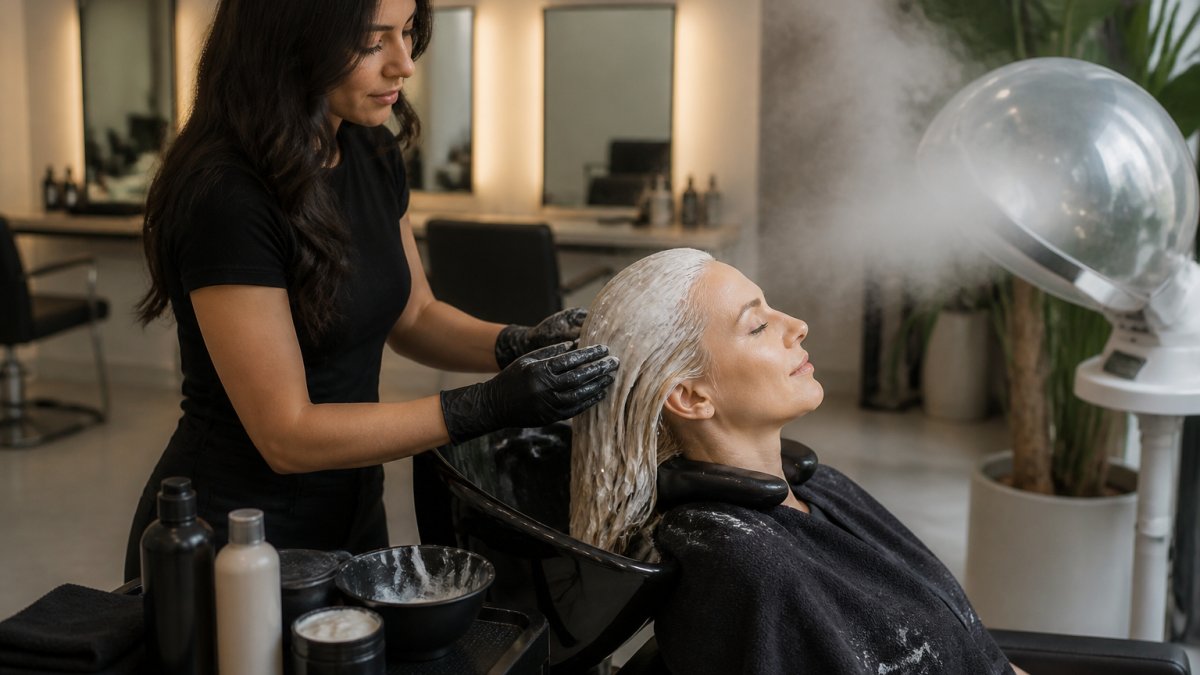
Bleached hair usually becomes high-porosity: it soaks up water fast and loses it just as fast. A leave-in and weekly mask slow that loss.
Step 3: Build a Bleach-Damaged Hair Treatment Routine
A bleach-damaged hair treatment routine works best as a weekly rhythm. Consistency beats intensity.
Here is the routine we recommend:
- Weekly: one deep conditioning mask, 20 minutes.
- Every other wash: a bond repair treatment.
- Daily: leave-in conditioner on damp ends.
- Before washing: a scalp oiling or pre-wash treatment on dry ends.
- Monthly: a protein treatment, only if strands still feel mushy.
A common mistake is overloading on protein, which makes hair stiff and brittle. Alternate protein weeks with moisture weeks.
For a professional reset, our team offers treatments built around your hair’s condition. Contact the salon to book a consultation and get a plan for your hair type.
Step 4: Can You Repair Bleached Hair Without Cutting It?
You can improve bleached hair without a big chop, but you cannot rebuild what bleach removed. Hair is not living tissue; once the cortex breaks, no product restores it.
What treatments can do:
- Smooth the cuticle so hair feels softer
- Reduce breakage and shedding
- Restore shine and elasticity
- Buy time between trims
What they cannot do:
- Rejoin split ends
- Reverse thinning at the root
- Make brittle hair strong again permanently
The honest answer to “can you repair bleached hair without cutting it”: you can make it look and feel far better and slow the damage. A small trim still helps, even half an inch.
To refresh tone or correct uneven bleach without a big cut, our team handles color correction and Air-Touch highlights with strand health as the first priority.
Frequently Asked Questions
How to make bleached hair soft and silky?
Start by swapping to a gentle shampoo and washing less often, then apply a deep-conditioning hair mask once a week. Use a leave-in conditioner on damp ends and seal with a light hair oil. Avoid heat styling and let hair air-dry when possible. A bond-building treatment can help rebuild the hair shaft over time. If hair still feels straw-like after four to six weeks, a professional stylist can assess whether a trim or in-salon treatment is needed.
Can you repair bleached hair without cutting it?
You can improve the look and feel of bleached hair without a big cut, but you cannot fully reverse structural damage. Bond builders, protein treatments, and deep conditioning can temporarily rebuild the hair shaft and reduce breakage. However, split ends will keep traveling up the strand, so a small trim of the most damaged ends is often necessary. For many people, a dusting or light trim every eight to twelve weeks keeps hair looking healthier while it grows out.
How often should you wash bleached, damaged hair?
Wash bleached hair two to three times a week at most, using a gentle, sulfate-free shampoo. Over-washing strips natural oils and speeds up dryness. On days between washes, use dry shampoo if needed and refresh ends with a leave-in conditioner. Always follow with a conditioner, and once a week replace your regular conditioner with a deep-conditioning hair mask. Rinse with cool water to help seal the cuticle.

