
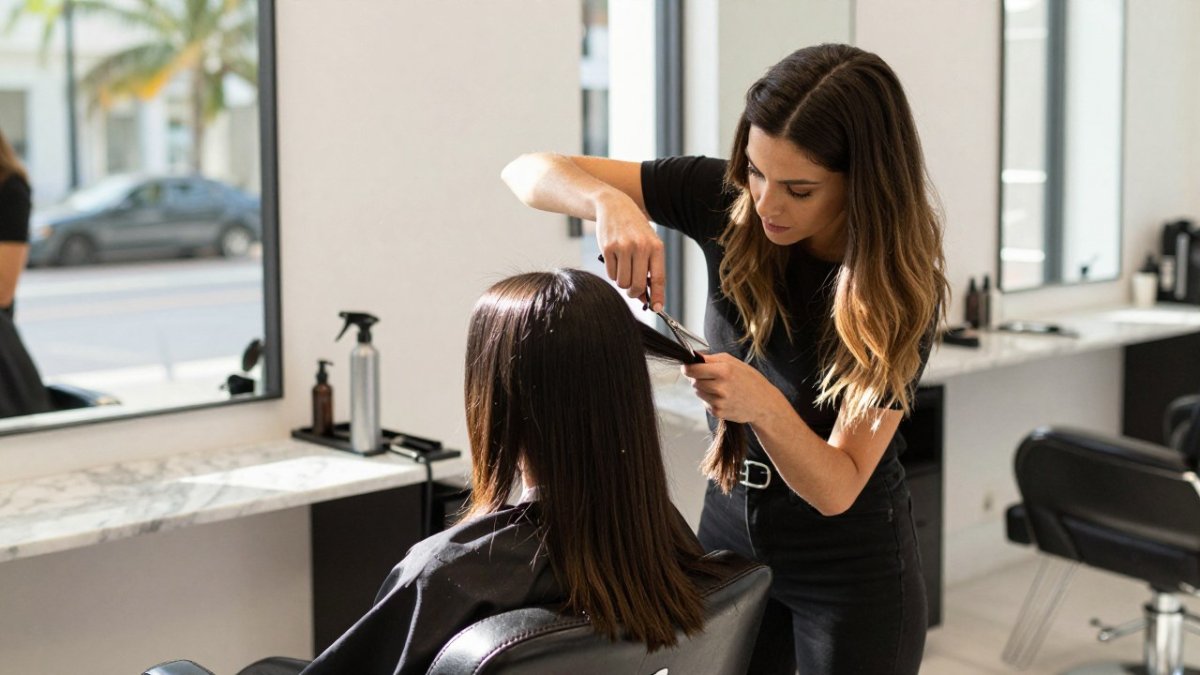
Last Updated: November 12, 2026
Quick Summary
Precision cutting maps the hair into measured sections and cuts each at a deliberate angle before the shears touch it, while a standard salon cut follows a familiar pattern and finishes by eye. Choose precision cutting for structured styles, fine or thinning hair, or uneven ends, and a standard cut for quick length resets or tight budgets.
- Precision stylists set the weight line before cutting, then use sectioning and controlled angles to place it.
- One salon lists precision haircuts starting at $80, with a curl-focused cut starting at $125.
- Fine hair exposes every imprecise line, so precision work keeps the perimeter solid and weight distributed.
- A precision cut generally takes more time and depends on stylist skill than a standard cut.
- A precision cut means the appointments you keep matter more, not fewer appointments.
Table of Contents
- Precision Cutting vs Standard Salon Cuts: The Core Difference
- The Precision Haircut Meaning, and What It Is Not
- Precision Haircut Pictures: What the Shape Actually Looks Like
- How Cutting Technique, Angles, and Sectioning Change the Result
- How Hair Texture and Natural Fall Affect the Cut
- Customization: Face Shape, Features, and Consultation
- Benefits and Drawbacks of Each Option
- Precision Haircut Maintenance and Grow-Out Expectations
- Precision Cutting vs Standard Salon Cuts: Which Should You Choose?
- Frequently Asked Questions
Precision Cutting vs Standard Salon Cuts: The Core Difference
The difference is method: precision cutting maps the hair before the shears touch it, while a standard cut follows a familiar pattern and finishes by eye. Precision cutting sections hair into controlled subsections, cutting each at a deliberate angle so the shape holds its line as it grows out.
The Precision Haircut Meaning, and What It Is Not
A precision haircut is built from measured sections and controlled cutting angles, with every strand placed to serve a planned shape rather than trimmed to a uniform length. It is not simply a trim, and the difference shows in the weeks after the cut, when the shape still falls as it did on day one.
Sam Villa’s guide to professional cutting habits notes that cutting with purpose and matching technique to the specific haircut are what separate refined work from routine trims.
Precision Haircut Pictures: What the Shape Actually Looks Like
You can spot precision work in a photo: clean perimeter lines, even ends that do not feather or fray, and a silhouette balanced from front, side, and back.
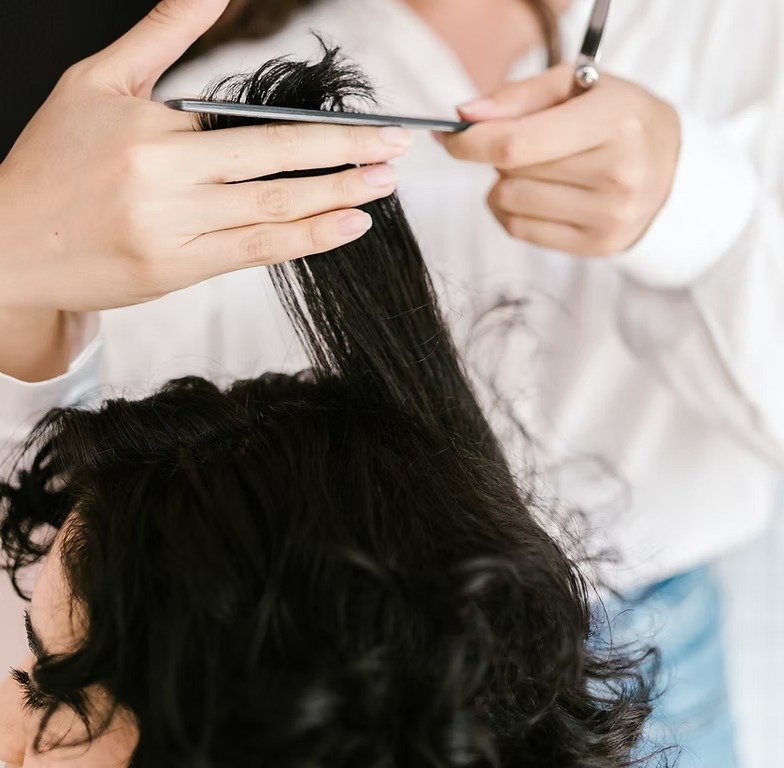
Precision shows most clearly in movement: a well-executed cut swings cleanly when the head turns, while a standard cut can separate into uneven pieces. Texture changes what precision looks like across straight, wavy, and curly hair.
If that is the shape you are after, you can book a precision haircut and see the service in detail.
How Cutting Technique, Angles, and Sectioning Change the Result
A precision stylist decides where the weight line sits before cutting, then uses sectioning and controlled angles to place it there. A standard cut removes length evenly and adjusts afterward.
| Element | Precision Cut | Standard Salon Cut |
|---|---|---|
| Sectioning | Small, measured sections | Larger sections or freehand |
| Grow-out | Holds shape longer | Shape fades sooner |
| Best for | Structured styles, fine or thinning hair, blunt bobs | Simple trims, frequent maintenance, tight budgets |
One salon’s published menu lists precision haircuts starting at $80, with the price varying by stylist level, alongside a separate curl-focused cut starting at $125 (Salon Bravissimo’s haircut pricing breakdown). That gap is typical: you are paying for time and technical training, not just scissors.
How Hair Texture and Natural Fall Affect the Cut
Fine hair exposes every imprecise line, so precision work keeps the perimeter solid and the weight distributed so the hair does not collapse. Curls can shrink as they dry, so a cut is often planned around where the hair will rest.
Customization: Face Shape, Features, and Consultation
A precision cut is built around the individual: face shape, hairline, growth patterns, and how you actually wear your hair. A precision stylist should ask how you style at home, how often you want to return, and what you disliked about your last cut. Those details shape not only the cut but the styling choices that make it work day to day, a distinction explored through Kesley Studio.
Benefits and Drawbacks of Each Option
Precision cutting can offer long-term wearability, since a defined shape may hold between visits. A precision cut generally takes more time and depends on stylist skill, while a standard salon cut may be quicker and simpler to book.
Precision Haircut Maintenance and Grow-Out Expectations
A precision cut does not mean fewer appointments; it means the appointments you keep matter more. How long a cut holds its line depends on growth speed, texture, and styling routine. Your stylist can recommend a maintenance interval at your consultation.
Precision Cutting vs Standard Salon Cuts: Which Should You Choose?
Choose precision cutting if your hair shows uneven ends, you wear a structured style, your hair is fine or thinning, or you want a shape that survives six weeks of real life. Choose a standard salon cut for a quick length reset, short-cycle maintenance, or when budget decides. The biggest mistake is choosing on price alone without asking what the service includes.
If you have been cycling through cuts that look right for a week and wrong for a month, the problem is usually the shape, not your hair. At Danny Jelaca Salon, our precision cutting service is built around bespoke, red-carpet transformations, and we use Organic Ceutical hair treatments to help prioritize hair integrity. You can also contact the salon for availability and directions.
Frequently Asked Questions
What is the difference between a precision haircut and a regular haircut?
A regular haircut or standard trim follows a basic shape and removes length, often working quickly through the hair. Precision cutting works in small, sectioned subsections at controlled angles, so every strand lands where the shape needs it. The result is cleaner lines, even weight distribution, and a silhouette that holds its form as it grows out. The trade-off is time and stylist skill: a precision cut takes longer to execute and depends on technical training and attention to detail.
How long does a precision haircut last, and how often should curly hair be trimmed?
A precision cut keeps its shape longer than a standard cut because the weight distribution and clean lines are built in, so grow-out looks intentional rather than heavy. How often to return depends on growth speed, texture, and curl pattern, since these shift as length changes. Ask your stylist at the consultation what interval suits your texture and styling routine.
Who benefits most from a precision haircut?
Precision cutting suits anyone who wants a defined shape that holds between visits, especially people with structured styles like bobs, blunt cuts, or layered shapes, and anyone whose hair texture or growth patterns make an ordinary cut fall unevenly. It also helps low-maintenance routines, because balanced weight distribution means less daily styling effort. If you want a quick trim with no shape change, a standard cut is the simpler choice. Book a consultation to review precision haircut pictures and decide together.

